Medical chronology
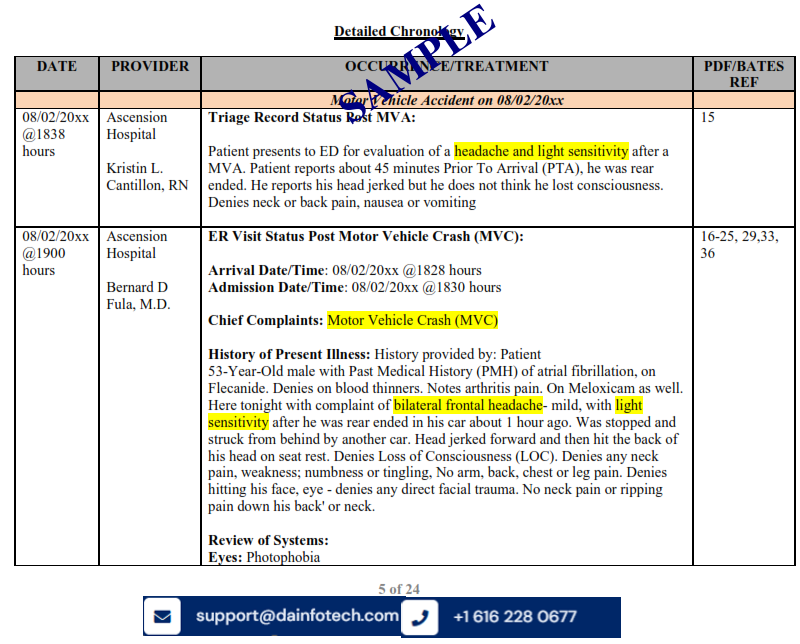
A date-ordered view of relevant encounters, providers, reported complaints, documented findings, tests, treatment and follow-up. Agree on the level of detail and source-reference method before work begins.
Learn more
Medical records can tell a complicated story. When treatment spans providers, dates, and different types of care, finding the sequence and assessing the records can take a long time before your team can concentrate on strategies for winning the case.
DigitalAge Infotech helps law firms conduct detailed medical record reviews and break down complex medical documentation into understandable, case-focused information. Our review can include medical chronologies, summaries and other agreed deliverables, with injury-related details highlighted for easier reference.
Our focus goes beyond organizing records. We review the documented treatment history, highlight injury-relevant findings and explain the sequence of care in clear, understandable terms, helping your team see how the documented injuries and treatment may have affected the client's life.
Tell us the case type, approximate record volume, the output your team needs and the target date. We can discuss the matter and the documentation required at its current stage.


Medical records rarely arrive as one simple story. An emergency department note may sit in one batch, imaging in another, and therapy or follow-up notes somewhere else. Dates can span months or years. A referral may appear in the available file without a later visit to show what happened next.
Meanwhile, your team still has deadlines, client communication and case-preparation tasks to manage. Before anyone can assess the documented treatment history, someone has to find the sequence, organize the details and work out where the source information lives.
Detailed medical record review goes beyond putting documents in order. It examines the documented treatment history, identifies and highlights injury-related details, and brings together relevant findings, treatment, follow-up and functional impact described in the records. This gives attorneys a clearer understanding of how the injuries have affected the client's life and helps them evaluate and develop the claim. The legal team retains responsibility for legal strategy and conclusions.
The attorney determines the point the case has reached in the litigation process and the documentation needed to support the next step. DigitalAge Infotech works to the attorney's instructions and agreed scope, preparing the requested output in the format confirmed before work begins.
A date-ordered view of relevant encounters, providers, reported complaints, documented findings, tests, treatment and follow-up. Agree on the level of detail and source-reference method before work begins.
Learn moreA concise, structured overview of the medical history and treatment relevant to the matter, prepared to the agreed instructions.
Learn moreA clearer arrangement of a large record set so your team can navigate documents and sections more easily.
Learn moreStructured medical information to support an attorney's demand-package preparation, based on the instructions and deliverables agreed for the engagement.
Learn moreIf your team needs a different format, describe the intended use during scoping. Availability, format and scope should be confirmed before the engagement starts.
Our review is intended to do more than organize medical information. It highlights documented injuries, treatment progression, relevant findings and details that may show how the injuries have affected the client's daily life. This can help the legal team assess the claim and identify areas for further investigation. Legal strategy and conclusions remain with counsel and appropriately qualified experts.

AI-enabled tools may help your team search, sort or summarize large volumes of information. The next question is how the output will be checked.
Yes. DigitalAge Infotech has a team of MD physicians who can review the accuracy of AI-generated outputs and complement the summary with relevant, case-valid medical inputs. If your firm already uses AI or internal tools, tell us about your current workflow and the specific review or validation support you need. The scope and availability of this support will be confirmed before an engagement begins.

A non-confidential outline of the case type, approximate record volume, output required and target date. Do not send identifiable patient information until DigitalAge confirms its approved secure submission process.
Share the format or a non-confidential specification during scoping. DigitalAge should confirm feasibility, included work and any effect on timing or estimate before the engagement starts.
Turnaround depends on record volume, complexity, requested output and current capacity. Ask DigitalAge to confirm a realistic schedule after reviewing the scope.
Discuss your current workflow and the gap you need to fill. DigitalAge should confirm which inputs and outputs it can support; the first conversation does not assume you need to replace an existing process.
You can start by discussing one file. DigitalAge will confirm whether the requested scope and timing are a fit before work begins.
DigitalAge Infotech uses a secure, cloud-based content collaboration and file-sharing platform. After the scope is discussed and the required arrangements are confirmed, the team will explain how to use the approved platform to transfer records.
Does your medical record set need to be analyzed, summarized and made court-ready? Start by telling us the case type, approximate record volume, the output your team needs and the target date.